The Mirage of the "Will of the People"

In 2008, the Maldives witnessed what many described as a democratic miracle. For the first time in thirty years, the "will of the people" was supposedly distilled into a single, undeniable result. We celebrated the transition as a victory of human spirit and political courage. But nearly two decades and several "landslides" later, Maldivian politics often feels less like a stable consensus and more like a chaotic oscillation between extremes. One year we have a "Yellow Wave," the next, a "Some Color Landslide." We blame the personalities, the corruption, or the foreign influence, and while those are real, they mask a much deeper problem.

We operate under a comforting illusion, that if we just collect everyone's preferences and count them correctly, we will arrive at a result that truly reflects what "the people" want. However, in the 1950s, a mathematician named Kenneth Arrow proved that this is logically impossible.

The moment you have more than two candidates, any method we use to aggregate those votes is guaranteed to be fundamentally irrational. Whether it’s the First-Past-The-Post (FPTP) system we use for our Parliament (the People’s Majlis) or the Two-Round Runoff we use for the Presidency, our systems are riddled with mathematical "glitches" like the Spoiler Effect and Condorcet Cycles.
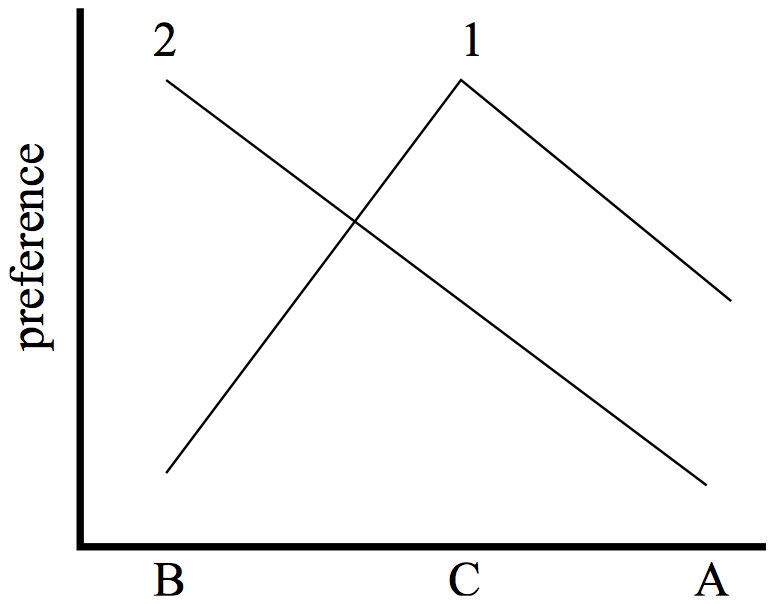
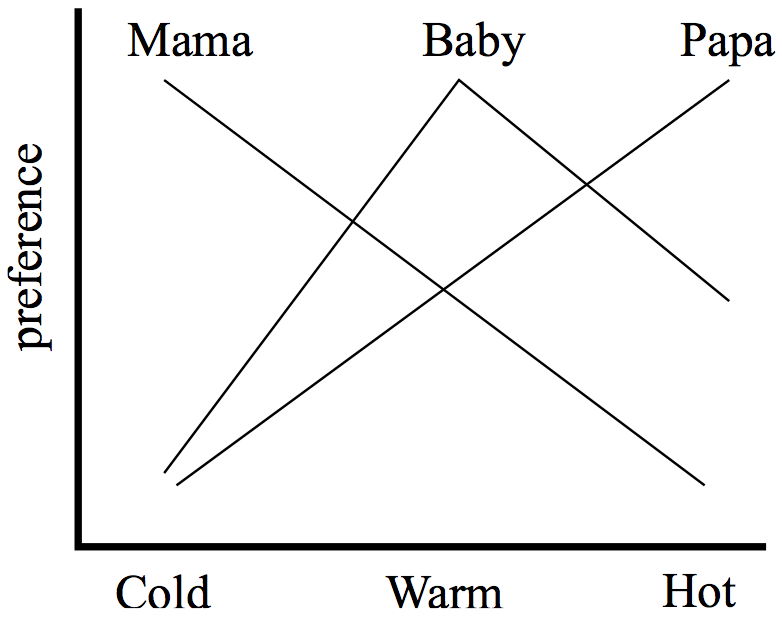
These reveal that no voting system can simultaneously satisfy basic fairness criteria when there are three or more options. The "will of the people" isn't a clear signal waiting to be captured, rather it's something our mathematics tells us cannot be consistently or rationally extracted from individual preferences. To understand why Maldivian democracy feels like a perpetual motion machine that never quite balances, we have to look past the campaign posters and dive into the "hard logic" of Social Choice Theory. In 1951, Kenneth Arrow, an economist and mathematician, dropped a logical bombshell on the democratic world. He was interested in Aggregation Functions rather than having an interest in political rhetoric. Specifically, he wanted to know if there was a way to take a set of individual preferences and turn them into a single, "fair" social ranking.
His conclusion? There isn't.
Arrow started with five conditions that any "fair" voting system should intuitively satisfy. If a system fails even one of these, it can be argued that the system isn't truly democratic or rational.
Unrestricted Domain
The system must be able to process any possible set of individual preferences. If a voter wants to rank a niche third-party candidate first and the two giants last, the system shouldn't "break" or ignore that ballot. It must produce a deterministic result every single time, regardless of how chaotic the input is.Non-Dictatorship
This is the most obvious one. There should be no "pivotal voter" whose preferences always become the social outcome, regardless of what everyone else wants. If one person’s ballot is the only one that matters, you don’t have an election; you have an appointment.Pareto Efficiency (Unanimity)
If literally every single person in the Maldives prefers Candidate A over Candidate B, then the final social ranking must reflect that. It would be mathematically absurd for a system to output B > A when 100% of the population believes A > B.
Formally: ∀i ∈ N, (A >_i B) ⟹ (A >_social B)Transitivity
This is where human intuition usually fails, but math remains rigid. If the group prefers MDP to JP (A > B), and they prefer JP to PPM/PNC (B > C), then logically, the group must prefer MDP to PPM/PNC (A > C). If a system allows for "cycles" (where A > B > C > A), the system is essentially chasing its own tail and can never reach a stable decision.
Independence of Irrelevant Alternatives (IIA)
This is the "Kingmaker" killer. The IIA axiom states that the social ranking of A and B should depend only on how voters rank A and B relative to each other. The introduction of a "third" candidate, C, should not flip the winner between A and B.If A beats B in a head-to-head, but B beats A simply because C entered the race (The Spoiler Effect), the system has violated the IIA. This is exactly what happened in the 2000 US Election with Ralph Nader, and arguably, what we see in the Maldives when third-party "spoiler" candidates split the vote in the first round of the Presidency.
Arrow’s Impossibility Theorem states that if you have three or more candidates, it is mathematically impossible to design a ranked voting system that satisfies all five of these conditions simultaneously. Think about the weight of that. It’s not a matter of "better training" for the Elections Commission or "cleaner politics." It is a mathematical wall. If you want a system that is transitive and respects unanimity, you must eventually allow for a dictator or violate the independence of irrelevant alternatives.
To see how this works in practice, let's look at the Pivotal Voter proof. Imagine we have a line of voters. Initially, everyone puts Candidate B at the very bottom of their list. Naturally, the "social rank" puts B at the bottom. Now, we start moving B from the bottom to the top, one voter at a time. Because the system must be deterministic (unrestricted domain), there must be a specific voter whose change of heart suddenly flips B from the bottom of the "social ranking" to the top. This voter is the Pivotal Voter. Arrow proved that this pivotal voter, under a ranked system, effectively becomes a dictator for certain pairs of candidates. If you try to fix this by stripping that power away, you inevitably break one of the other axioms, like Transitivity or IIA.
The most disturbing takeaway for us in the Maldives is that even if every individual voter is perfectly rational, the group as a whole can be completely irrational. You can have a nation of smart, decisive people who, when polled through a ranked ballot, produce a result that is cyclic, unstable, and mathematically "nonsense."
If Arrow’s Theorem is the "structural" wall of democratic math, then the Condorcet Paradox and the Monotonicity Failure are the cracks in the foundation that actually cause the building to shake. In the Maldives, we are kind a obsessed with who our first choice is, who our second choice is, and which party we would never vote for. We assume that by ranking our preferences, we are being more "expressive." But mathematically, ranking is a trap.
Marquis de Condorcet came up with something called the Condorcet Paradox, this paradox shows how a society can be collectively "stupid" even if its individuals are perfectly logical. Imagine three voters in Malé trying to decide on the future direction of the country. We have three main "flavors" of policy:
- Candidate A (MDP)
- Candidate B (PNC/PPM style)
- Candidate C (JP/Other)
The preferences look like this:
- Voter 1: A > B > C
- Voter 2: B > C > A
- Voter 3: C > A > B
Now, let's look for a "majority" winner.
- In a head-to-head between A and B, A wins (Voter 1 and 3 prefer A).
- In a head-to-head between B and C, B wins (Voter 1 and 2 prefer B).
- So, logically, if A > B and B > C, then A must be the best, right?
Wrong. If you run a head-to-head between C and A, C wins (Voter 2 and 3 prefer C).
This is a Condorcet Cycle. There is no "will of the people" here; there is only a circle of A > B > C > A.
In this scenario, the winner isn't determined by who is most popular, but by who sets the agenda. If you decide to vote on A vs. B first, C wins eventually. If you start with B vs. C, A wins. This is why the power to "schedule" or "structure" an election (something like what happened in 2013 with the Supreme Court) is often more powerful than the votes themselves. It is a bit of like musical chair where you choose where to stop the circle.
Perhaps the most "technical" betrayal in voting math is the failure of the Monotonicity Criterion. This is a specific flaw in Instant Runoff Voting (IRV), a system often touted as the "fair" alternative to our current methods. The criterion states that if a candidate is winning, and then some voters change their minds to rank that candidate higher (while keeping everyone else the same), that candidate should still win. It seems like common sense. But in a ranked system, it is mathematically possible for a candidate to lose precisely because they gained support.
How? Think about the "elimination" rounds. In a three-way race (A, B, C), if candidate C is the smallest, they get eliminated, and their votes go to their second choice (say, A). This allows A to beat B. But if candidate A has an unusually good week and pulls some voters away from B, something weird can happen. Now, B might become the smallest candidate instead of C. If B is eliminated, and B’s voters actually preferred C as their second choice, then C gets a massive boost and beats A. By doing better and gaining more first-place votes, Candidate A changed the "elimination order" and accidentally caused their own defeat. This means that in a ranked system, you can be punished for being "too popular" at the wrong time. It turns the election into a game of "strategic mediocrity" rather than a true search for excellence.
These theories explain a recurring tragedy in Maldivian politics, which is the "hollowing out" of the middle. In a Condorcet or Monotonicity-prone system, being everyone's "second choice" (the moderate) is the most dangerous position to be in. Moderate parties often find themselves at the center of these cycles. They are the "Condorcet winners" (the candidates who might beat everyone else in head-to-head matchups), but they are frequently the first to be eliminated in a multi-party runoff because they don't have enough "hardcore" first-place votes.
The math effectively forces the electorate into two polarized camps. You are either A or B. If you try to be C, the mechanics of the ranked system will eventually chew you up and spit you out, leaving the country with a winner that half the population absolutely loathes.
If you look at the last fifteen or so years of Maldivian politics as a series of personality clashes between "The Old Guard" and "The Reformists," you’re only seeing the surface. To a social choice theorist, the history of the Maldives since 2008 probably looks like a textbook demonstration of what happens when you try to force a complex, multi-polar society through the narrow, broken "pipes" of FPTP and Two-Round Runoff mathematics. I believe we’ve been trapped in a series of mathematical anomalies that have dictated our stability, or the lack thereof.
The 2013 Presidential Election is perhaps the most "Condorcet" moment in recent history of elections. In the initial first round, Mohamed Nasheed secured roughly 45% of the vote, followed by Abdulla Yameen and Qasim Ibrahim. Under any rational interpretation of "the will of the people," a runoff should have proceeded. However, the Supreme Court’s intervention could be seen as a sequence disruption. The delay in the election allowed the "agenda-setters"to do a reconfiguration of preferences. This effectively "stopped the cycle" at a point where a coalition could be forced into existence. When the vote finally happened, the math had been manipulated by changing the Independence of Irrelevant Alternatives (IIA). By the time the final runoff occurred, the "irrelevant" alternatives had been legally and politically stripped away, forcing a binary that resulted in a Yameen victory.
For a long time, some Maldivians believed in the "Kingmaker" theory, the idea that 3rd candidate held the keys to the presidency. Mathematically, this was an artifact of the Two-Round Runoff system. Because no single party could reach the 50% + 1 threshold (the "Post" in our presidential race), the third-place finisher effectively became the Pivotal Voter. But if you look at what happened in 2024. The Kingmaker era simply imploded. This is Duverger’s Law in its final, brutal form. Duverger’s Law suggests that plurality-rule elections (like our parliamentary races) structured within single-member districts will eventually result in a two-party system. The 2024 Parliamentary election, where the PNC won a staggering 66+ seats while smaller parties were reduced to single seats or none at all, was the math finally "clearing the deck." The electorate, tired of the instability of "Condorcet Loops" and coalition gridlock, consolidated into a binary.

One of the most technically jarring aspects of the Maldivian Parliament is the disconnect between the Popular Vote and Seat Share.
- In 2019, the MDP won a "supermajority" of 65 seats.
- In 2024, the PNC won a "supermajority" of over 66 seats (and later 75+).
If you look at the raw numbers, the "winner" rarely commands 70% or 80% of the actual population's support. They usually hover between 45% and 55%. But because we use First-Past-The-Post in 93 separate "winner-take-all" mini-elections, the math amplifies a slight lead into total dominance. This creates a Stability Illusion. We see a sea of "Yellow" or "Blue" on the map and assume the country has reached a consensus. In reality, the math has just silenced the 45% who voted for the other side. This is a violation of the Pareto Efficiency (Unanimity) at a systemic level, where the "social choice" of the Parliament does not reflect the nuanced distribution of the voters' actual preferences. It produces a "Dictator" (in the Arrowian sense) out of a mere plurality.
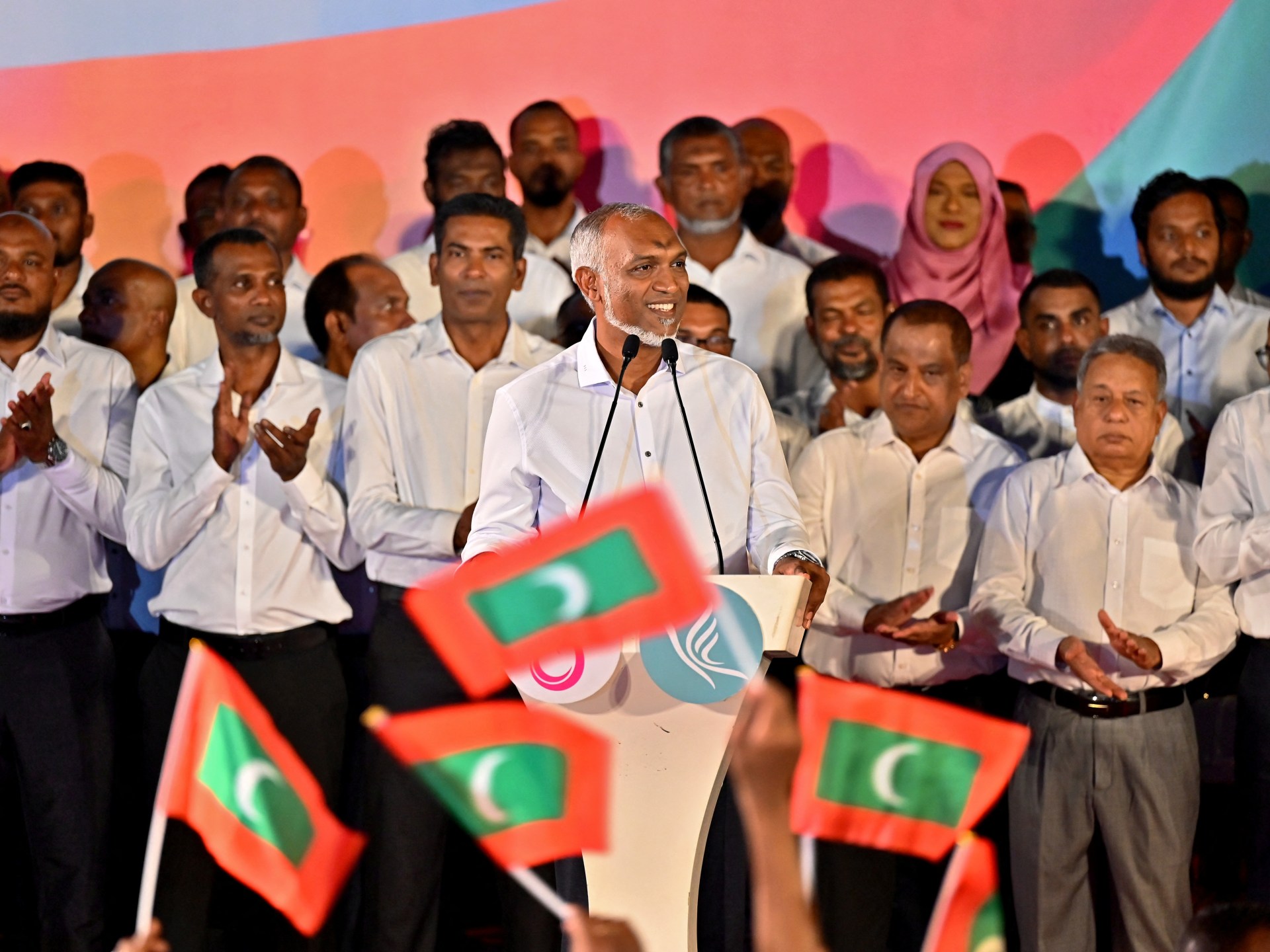
Why has our political discourse narrowed down to a single geopolitical axis? Because the math demands it. In a system governed by Arrow’s constraints, "Complexity is the enemy of Victory." If you introduce a third or fourth major issue (like environmental policy, debt restructuring, or judicial reform), you risk triggering a Condorcet Cycle where no one can win. To win in the Maldives, you must reduce the "Unrestricted Domain" of the voters' minds into a simple binary answer of a Yes or a No. A or B. I believe this is what happened in the 2023 and 2024 elections which largely revolved around a single, emotive foreign policy pivot, the parties successfully bypassed the "Ranking Trap." They turned a complex social choice problem into a simple arithmetic one. I would say knowingly or unknowingly it was a brilliant use of political math, but of course, it has left our democracy intellectually hollow.


For the first fifteen or so years of our democratic experiment, the Maldives operated on a "Tri-Polar" model. There was MDP on one end, tDRP (and later PPM, and then PNC) on the other, and a fluctuating group of "Kingmakers" in the middle. We used to believe this was the natural state of our politics, where there is a stable center that could pull the extremes back toward the middle. But in the last two election cycles, that center has been mathematically liquidated. To understand why, we have to look at Duncan Black’s Median Voter Theorem and how it has been weaponized (and eventually broken) in the Maldivian context.

Duncan Black proposed a refreshingly optimistic counter-point to Arrow’s Impossibility Theorem. He argued that if voters’ preferences can be mapped along a single, linear dimension (like a spectrum from "Liberal" to "Conservative"), then a "Fair" result is not only possible but inevitable. In this model, the Median Voter (the person standing exactly in the middle of the line) holds all the power. To win, a candidate just need to move closer to that center point than their opponent. Mathematically, if X is the position of the median voter, any candidate who positions themselves at X will defeat any candidate at X−ϵ or X+ϵ.
For years, I believe that JP and AP played this role. They were the "Median Party." They just needed to be the "middle" that everyone else had to bargain with to get to 50% + 1.

The Median Voter Theorem only works if the population follows a Normal Distribution (a Bell Curve), where most people are in the middle and the extremes are thin. If the population is "uni-modal," the system is stable. But the Maldives has shifted into a Bi-modal Distribution. Instead of a single peak in the middle, we now have two massive peaks at the extremes.
When a society polarizes this way, the "middle" becomes a vacuum. Mathematically, the distance between the two peaks increases, and the "Median Voter" becomes a statistical ghost, which is to say it is a person who doesn't actually exist because everyone has moved to the camps. This is why smaller parties saw their support vanish in 2023 and 2024. In a polarized bi-modal system, the "Middle" isn't a position of power, rather it is a "No Man’s Land" where you get shot from both sides.
The 2023 Presidential election was the final nail in the coffin for the "Kingmaker" math. Historically, the third-place candidate would take their 10–15% and "sell" it to the highest bidder in the second round. But in 2023, the math changed. The gaps between the two main blocks were so wide, and the ideological commitment of the voters so "hardened," that the leaders could no longer "deliver" their voters to another candidate. If a "Middle" leader tried to pivot to the "Left," their "Right-leaning" voters simply abandoned them and went directly to the other camp.
This is the Extinction of the Pivot Power. When the "Independence of Irrelevant Alternatives" is violated by extreme polarization, the "Third Option" ceases to be a choice and becomes a "Spoiler." The electorate, realizing this, strategically abandoned the smaller parties to ensure their "least-hated" giant would win.

In the 2024 Parliamentary elections, the PNC’s supermajority was the result of this "Consolidation Math." When the "Middle" died, the FPTP system became a binary "Yes/No" filter. In almost every constituency, the race was no longer a three-way split where a Kingmaker could sneak through. It was a head-to-head. And in a head-to-head under FPTP, the "Winner-Take-All" effect is at its most brutal. Even a 2% lead in the popular vote across the islands can translate into a 70% seat share in the Parliament. The Kingmakers lost because the mathematical environment of the Maldives had shifted from a Collaborative Game (where coalitions are rewarded) to a Zero-Sum Game (where only the largest survivor remains). The "Middle" of the Maldives is gone. And according to the math, it’s not coming back as long as our current voting architecture remains in place.
If we accept the "mathematical wall" of Arrow’s Theorem, we have two choices, that is to either continue playing a broken, irrational game that inevitably leads to supermajority-driven autocracy or "kingmaker" gridlock, or change the fundamental logic of the ballot. To fix the Maldives’ electoral volatility, I believe it would be a good idea for us to move away from Ordinal (ranked) systems and toward Cardinal (rated) systems. The goal should be to find a consensus.
The core of Arrow’s "Impossibility" lies in the act of ranking (A > B > C). When we rank, we are forced to hide how much we like someone. You might love A, think B is "okay," and find C to be a national catastrophe. But on a ranked ballot, the gap between A and B looks exactly like the gap between B and C. This loss of "information density" is what creates the cycles and paradoxes.
The solution is Approval Voting or Score Voting. In an Approval Voting system, there is no "ranking." You are given a list of candidates, and you simply tick the box for every candidate you find "acceptable" to lead the country. You can vote for one, two, or all of them. The candidate with the most total "approvals" wins.
In our current FPTP system, if a "third-party" candidate like a new reformist enters the race, they "steal" votes from MDP or PNC. Under Approval Voting, a voter doesn't have to choose. They can approve of both the giant and the newcomer. This ensures the newcomer can gain traction without accidentally electing the person they both oppose.
Approval voting is not a "ranked" system, so it technically sidesteps the constraints of Arrow's Impossibility Theorem. It satisfies the Independence of Irrelevant Alternatives (IIA) perfectly. Adding a third candidate never flips the winner between the original two.
Unlike the runoff system, which rewards the loudest extremes, Approval Voting rewards the "least-hated" candidate. To win, you must be acceptable to a broad cross-section of the population, not just a polarized 51%.
For the Parliamentary elections, the "Supermajority Anomaly" where 50% of the votes equals 80% of the seats is a threat to our democratic checks and balances. We need a system that reflects the actual ideological diversity of the islands.
I believe a Multi-Winner Approval System (or a form of Reweighted Range Voting) for the Parliament would be well suited for our current situation. Instead of 93 tiny "winner-take-all" battles, we could group atolls into larger multi-member districts. Voters would approve multiple candidates, and the winners would be selected using an algorithm (like the Proportional Approval Voting or "Sainte-Laguë" method) that ensures if 30% of the atoll approves of a certain party, they get roughly 30% of that district's seats. This preserves the "Peoples Voice" but eliminates the mathematical distortion that allows a single party to rewrite the Constitution without a true national consensus.
Approval Voting has been said to be too "boring." It lacks the high-stakes drama of the second-round runoff where the "winner-takes-all" showdown at the end of the ballot. But "exciting" math has led to nearly two decades of judicial crises, annulled elections, and a culture where losing an election feels like an existential threat to your party's survival. A "boring" system is a stable system. With the use of the Score Voting (giving candidates a 0–10 rating), we can finally allow the Maldivian voter to express the complexity of their beliefs. We can say, "I strongly support this policy (10), I am lukewarm on this infrastructure plan (5), and I absolutely reject this foreign policy (0)." When you aggregate intensities instead of just ranks, the result is a "Social Choice" that actually represents the equilibrium of the nation. It could turns the Parliament from a battlefield into a boardroom.
We’ve spent close to 2 decades trying to fix our democracy by changing our leaders. The math suggests we should have been changing our ballots. The "Will of the People" is something that is constructed by the rules of the game. If we keep playing with a "crooked" mathematical deck, we shouldn't be surprised when the house always wins!